
CBCT & Digital X-Rays in Woodridge, IL
At Seven Bridges Dental Studio, we use the latest digital imaging technology to see what traditional X-rays simply can't, so nothing gets missed.


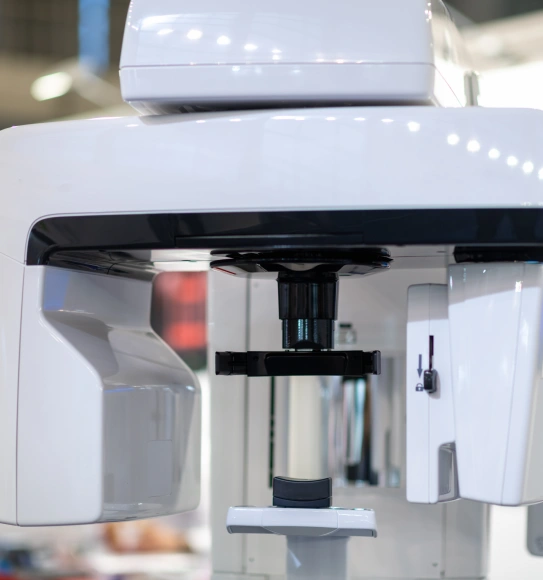
Advanced Imaging for More Precise, Confident Care
Great dental care starts with accurate information. At Seven Bridges Dental Studio, we've invested in state-of-the-art digital imaging technology, including CBCT 3D cone beam scanning and digital X-rays, because we believe you deserve a diagnosis based on the clearest, most complete picture of your oral health possible.
From routine checkups to complex implant planning, our advanced imaging capabilities allow Dr. Querishi to detect issues earlier, plan treatment more precisely, and explain your oral health to you in a way that's clear and easy to understand.
Schedule Your Consultation
CBCT 3D Imaging & Digital X-Rays — What's the Difference?
For decades, dentists relied exclusively on two-dimensional X-rays to evaluate dental health. While digital radiography is far more detailed and safer than traditional film X-rays, a 2D image can only convey a fraction of what a 3D scan reveals. Together, these two technologies give our Woodridge dental team a complete, layered view of your oral structures, above and below the surface.
- Digital X-Rays: Digital radiography uses a fraction of the radiation of traditional film X-rays and produces instant, high-resolution images that Dr. Querishi can review with you chairside in real time. They're ideal for detecting cavities between teeth, assessing bone levels, evaluating root health, and monitoring changes over time.
- CBCT 3D Cone Beam Imaging: CBCT (Cone Beam Computed Tomography) takes dental imaging to an entirely new dimension, literally. Instead of a flat, two-dimensional snapshot, CBCT produces a detailed three-dimensional model of your teeth, roots, jawbone, nerves, sinuses, and surrounding structures. This high-quality 3D imaging is particularly powerful for planning dental implant placement, evaluating impacted teeth, diagnosing TMJ disorders, and assessing complex root canal anatomy, all before a single procedure is performed.
Advanced Imaging for Better Outcomes
- Quick & Comfortable Setup - Both digital X-rays and CBCT scans are fast, non-invasive, and completely painless. Our team will position you comfortably and walk you through exactly what to expect before we begin, no surprises.
- Images Captured in Seconds - Digital X-rays are taken chairside in a matter of seconds. CBCT scans involve a brief rotation of the imaging arm around your head — the full scan typically takes less than a minute to complete.
- Instant Results, Reviewed Together - Images are available immediately on our chairside screens. Dr. Querishi will walk you through your results in plain language — pointing out exactly what she sees, answering your questions, and explaining how the findings will guide your care.
See Your Smile in a Whole New Way
Whether you're coming in for a routine exam or exploring treatment options like dental implants, our advanced imaging technology ensures Dr. Querishi has everything she needs to provide you with the most accurate, personalized care possible. We're currently welcoming new patients. We'd love to meet you.
Book Your Appointment Online
Serving patients in Woodridge, Darien, Lisle, Bolingbrook & surrounding communities
Frequently Asked Questions About CBCT & Digital X-Rays
Yes. Modern digital X-rays use up to 80% less radiation than traditional film X-rays, making them extremely safe for routine use. We also use lead aprons and thyroid collars as an added precaution. The diagnostic benefit of dental X-rays — catching decay, bone loss, and other issues early — far outweighs the minimal radiation exposure involved.
For most patients, a full set of X-rays is recommended every one to three years, with bitewing X-rays taken annually to monitor for cavities between teeth. New patients typically receive a full set at their first visit so Dr. Querishi has a complete baseline of your oral health. Your X-ray frequency may vary based on your individual risk factors and oral health history.
A CBCT (Cone Beam Computed Tomography) scan is a 3D imaging technology that produces a detailed, three-dimensional model of your teeth, jawbone, nerves, and surrounding structures. Not every patient needs a CBCT scan — Dr. Querishi will recommend one when 2D X-rays aren't sufficient, such as for dental implant planning, evaluating impacted teeth, assessing TMJ disorders, or planning complex oral surgery.
Not at all. A CBCT scan is completely non-invasive and painless. You'll simply stand or sit still while the imaging arm rotates around your head — the entire scan takes less than 60 seconds. There are no injections, no discomfort, and no recovery time.
CBCT 3D imaging is one of the most valuable tools in dental implant planning. It allows Dr. Querishi to precisely measure available bone volume, identify the exact location of nerves and sinuses, and determine the ideal implant position and angle — all before the procedure begins. This level of precision significantly improves implant outcomes and reduces the risk of complications.
We take extra precautions with pregnant patients and generally postpone routine X-rays until after delivery unless they are clinically necessary. If X-rays are needed for an urgent dental concern, we use full lead shielding to protect both mother and baby. Always let our team know if you are pregnant or think you may be pregnant before your appointment.
Absolutely. Your imaging belongs to you. If you need to share your X-rays or CBCT scans with a specialist, oral surgeon, or another provider, our team will provide digital copies promptly upon request.